
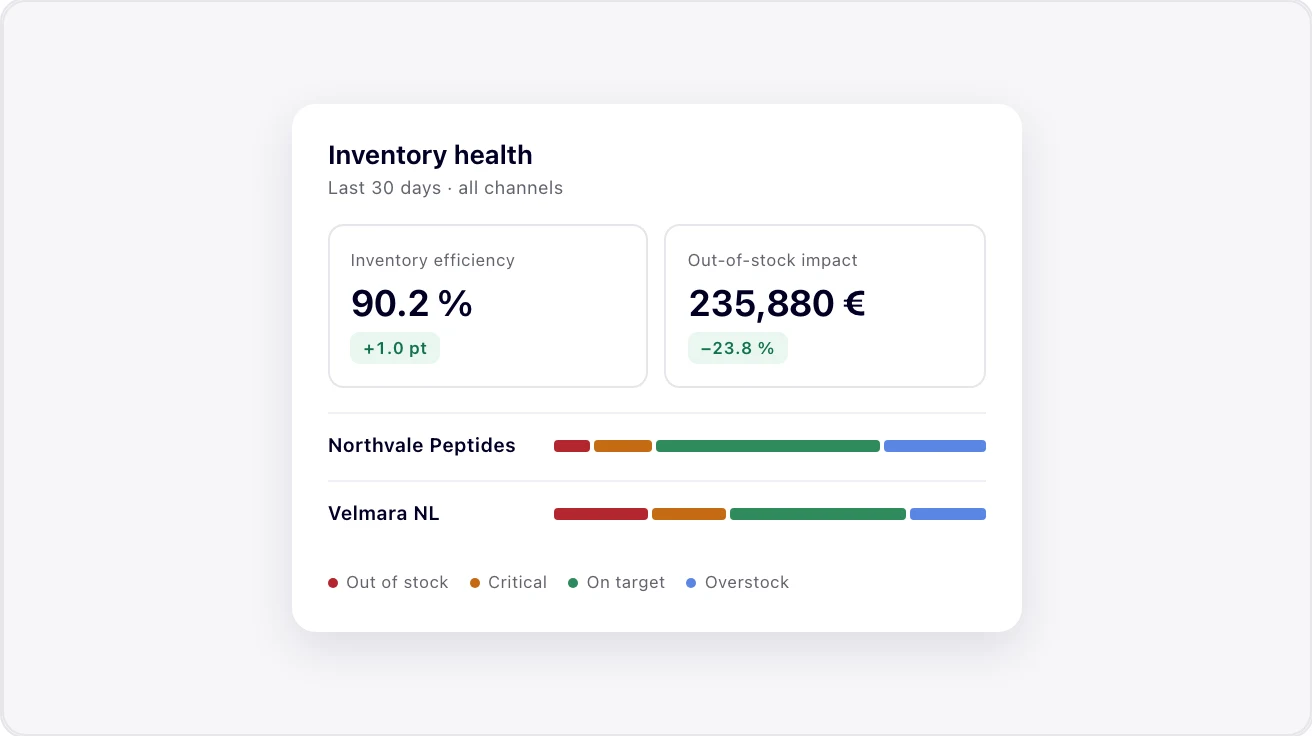
For decision-makers who want to see real customer examples, LinkedIn sources, and video proof before an audit.
Why this matters
Case studies are not only social proof for VOIDS; they are a learning format. They show which inventory problems happen in real brands: bestseller stockouts, cash in slow-moving stock, chaotic reorders, launch risks, and missing alignment between marketing and purchasing.
The value appears when proof is not only shown as logos or screenshots, but as readable context: who the brand was, what problem existed, which lever was used, and which source supports the story. That is why the case-study pages were expanded with more readable text.
For new buyers, this resource is a shortcut. Instead of speaking abstractly about forecasting, they can see how similar brands use VOIDS and which questions they should ask in their own audit.
Chapters and takeaways
01 Proof by use case
The case-study page bundles examples for OOS reduction, cash flow, inventory efficiency, and buying cadence.
02 Sources instead of claims
LinkedIn posts, brand websites, and videos make the proof readable and traceable.
03 Next step
After reviewing examples, a team should check its own OOS and cash-flow leverage in the assortment.
Operator checklist
- Select the matching use case
- Compare problem and result by brand
- Check LinkedIn source or video proof
- Identify similar SKU or lead-time complexity
- Derive your own audit lever