
For Shopify and DTC operators who want to understand why unavailable bestsellers directly affect revenue, paid-media efficiency, and forecast quality.
Why this matters
This tutorial frames stockouts not as an isolated warehouse issue, but as a systemic failure between demand, purchasing, marketing, and lead time. When a bestseller is unavailable, the shop does not only lose revenue. Sales history becomes distorted, paid campaigns send demand to weak availability, and the team often orders too late or too conservatively next time.
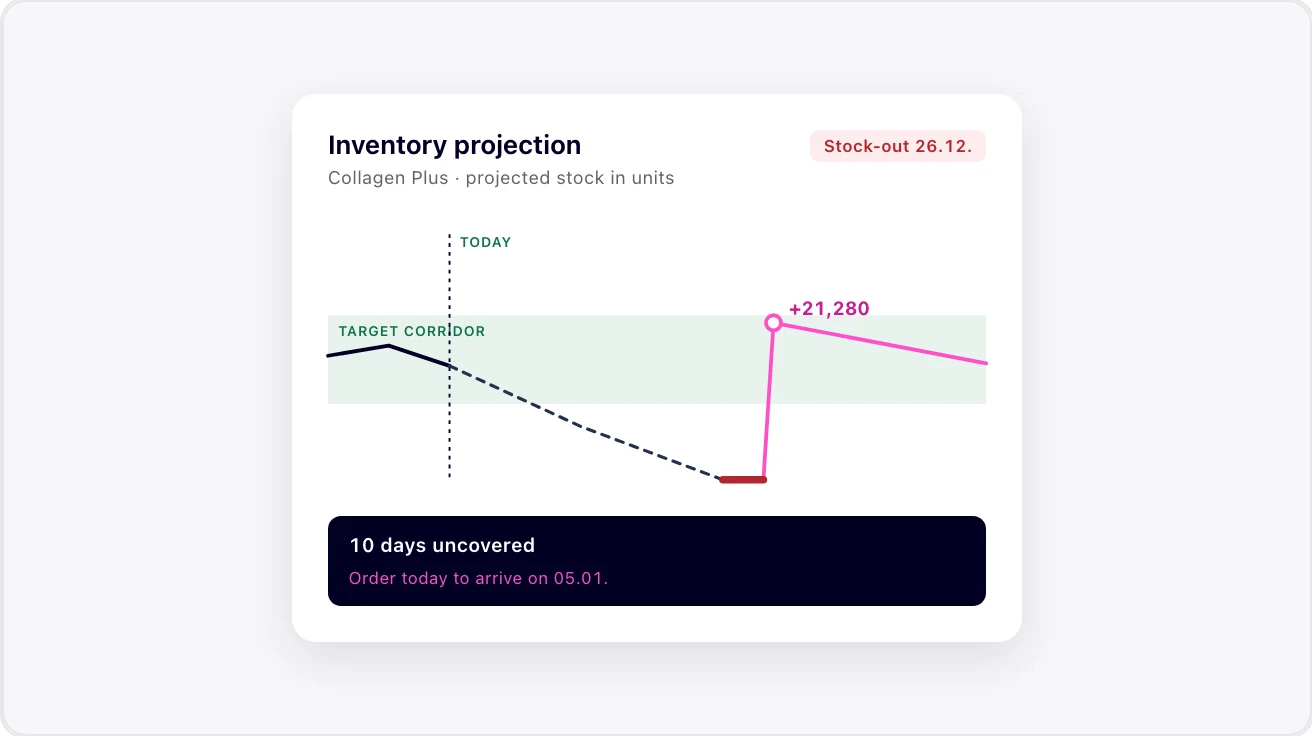
The key idea: a forecast is only valuable when it turns into concrete reorder decisions. VOIDS therefore translates demand, inventory, lead time, variant logic, and campaign context into an operational buying decision. This step separates reporting tools from real inventory planning software.
For scaling DTC brands, the fastest lever is usually not the entire assortment, but a prioritized view of bestsellers and variants. This is where opportunity costs are highest, where size or color variants matter most, and where growth becomes either profitable or chaotic.
Chapters and takeaways
01 Stockouts as a revenue problem
Unavailability is not only an operations issue: it distorts demand, lowers conversion, and turns replenishment reactive.
02 Forecasting for purchasing decisions
The leverage appears when forecasts translate into concrete reorder quantities, lead-time logic, and priorities.
03 Where VOIDS creates leverage first
The fastest starting point is bestsellers, variant availability, and assortments with recurring reorders.
Operator checklist
- Identify bestsellers with current OOS variants
- Evaluate revenue loss beyond the total OOS rate
- Check lead times and MOQs by supplier
- Translate forecasts into concrete reorder quantities
- Align paid campaigns with availability